UI/UX
RESEARCH
PROTOTYPING
VISUAL IDENTITY
MOTION GRAPHICS
Echo is a social music events platform designed to help people discover concerts, festivals, and gigs through the people they trust most, their friends. Most event platforms work like a database. They show you everything, personalise nothing, and leave you scrolling through hundreds of listings that have no relevance to your taste. Echo was built to fix that. Instead of an impersonal feed, you get a social experience. Echo started with a simple question: why does discovering live music still feel so lonely? From there, the project moved through problem discovery, user interviews, sketching, lo-fi prototyping, and testing, before arriving at a brand identity and high-fidelity prototype that puts community and culture at its core.
Problem Discovery
Through initial research, I identified key pain points with existing music event platforms:
Lack of Personalization: Most platforms present events as long, unfiltered lists
Missing Social Context: Existing platforms treat event discovery as a solitary experience
Fragmented Experience: Users often need to check multiple platforms
User Interviews
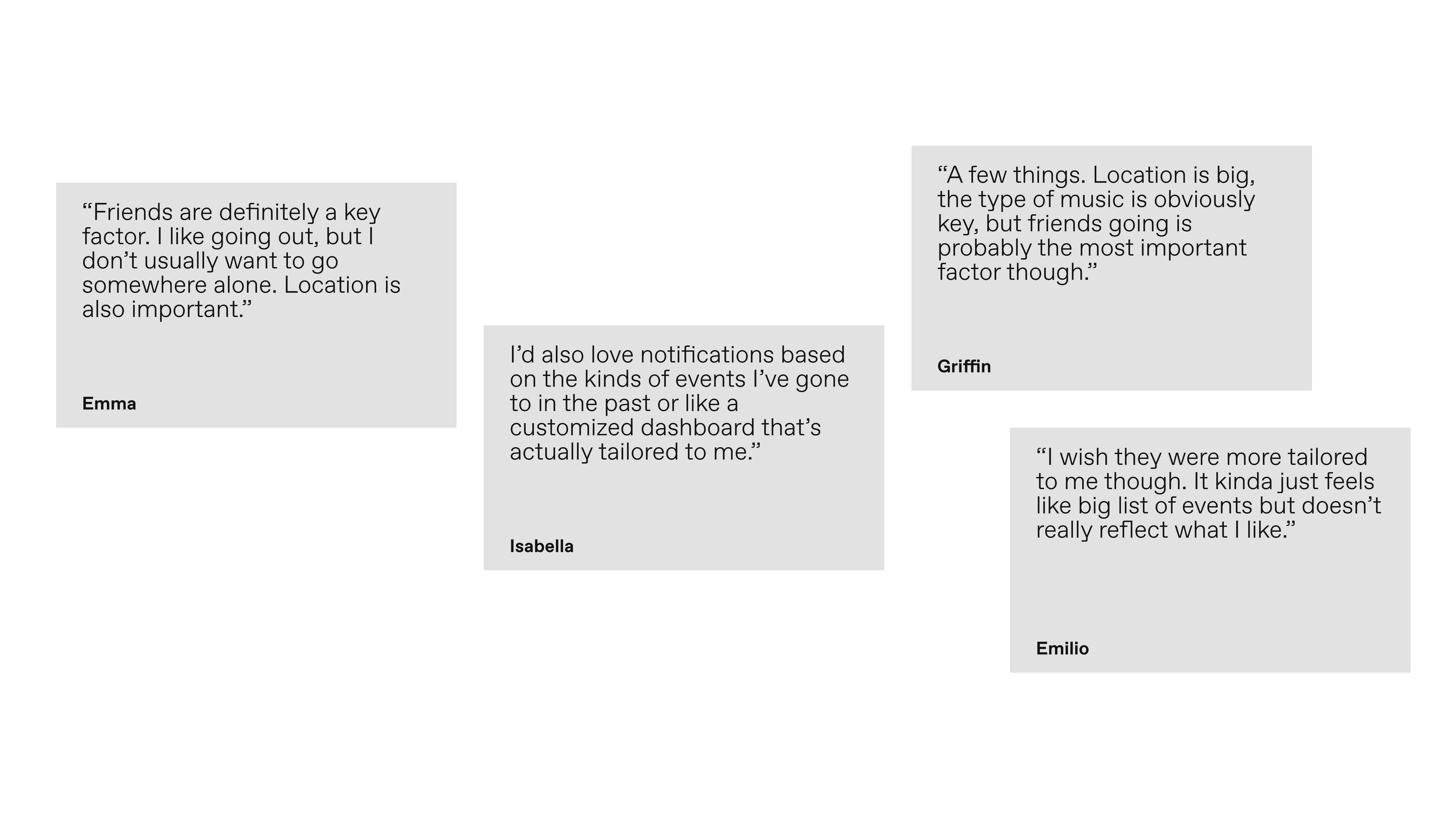
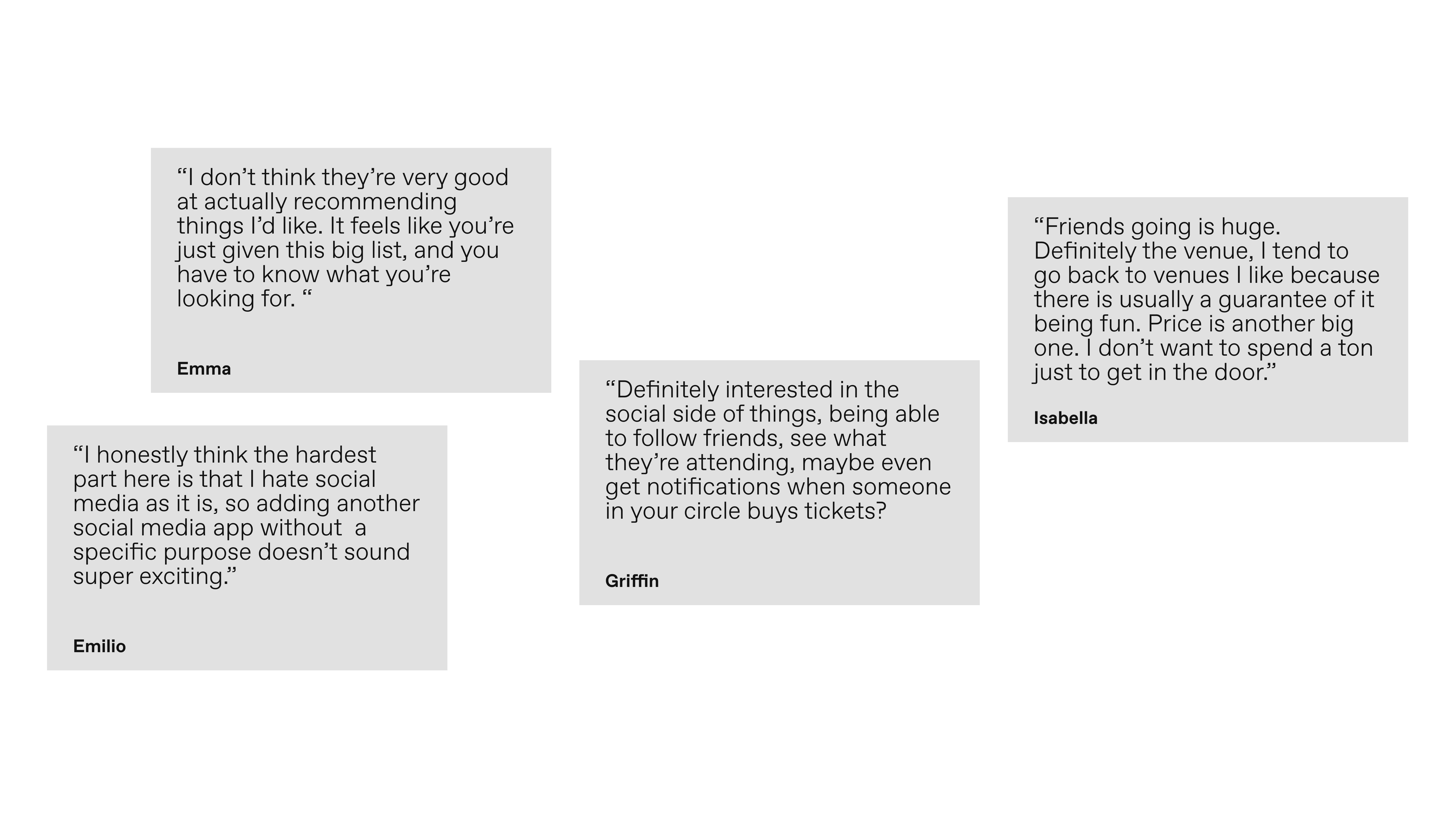
I conducted interviews with users aged 25-27, who frequently attend music events.
Key findings included:
Users value events not just for the experience itself, but for the social aspect of going with friends
Event apps should serve as a guide, not a database, with personal recommendations
People want to feel connected digitally without it being overbearing
Ideation, Sketching & Testing
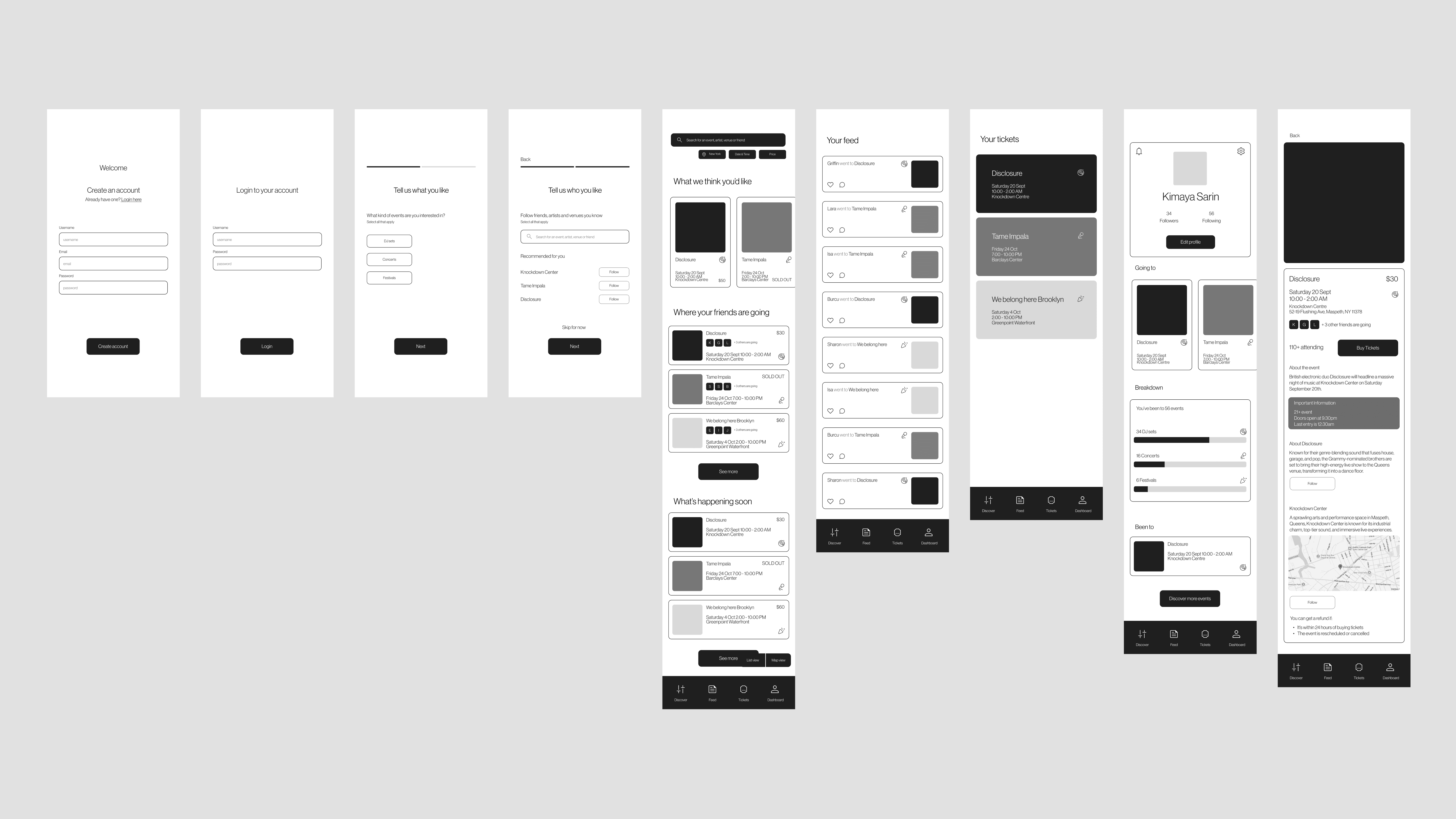
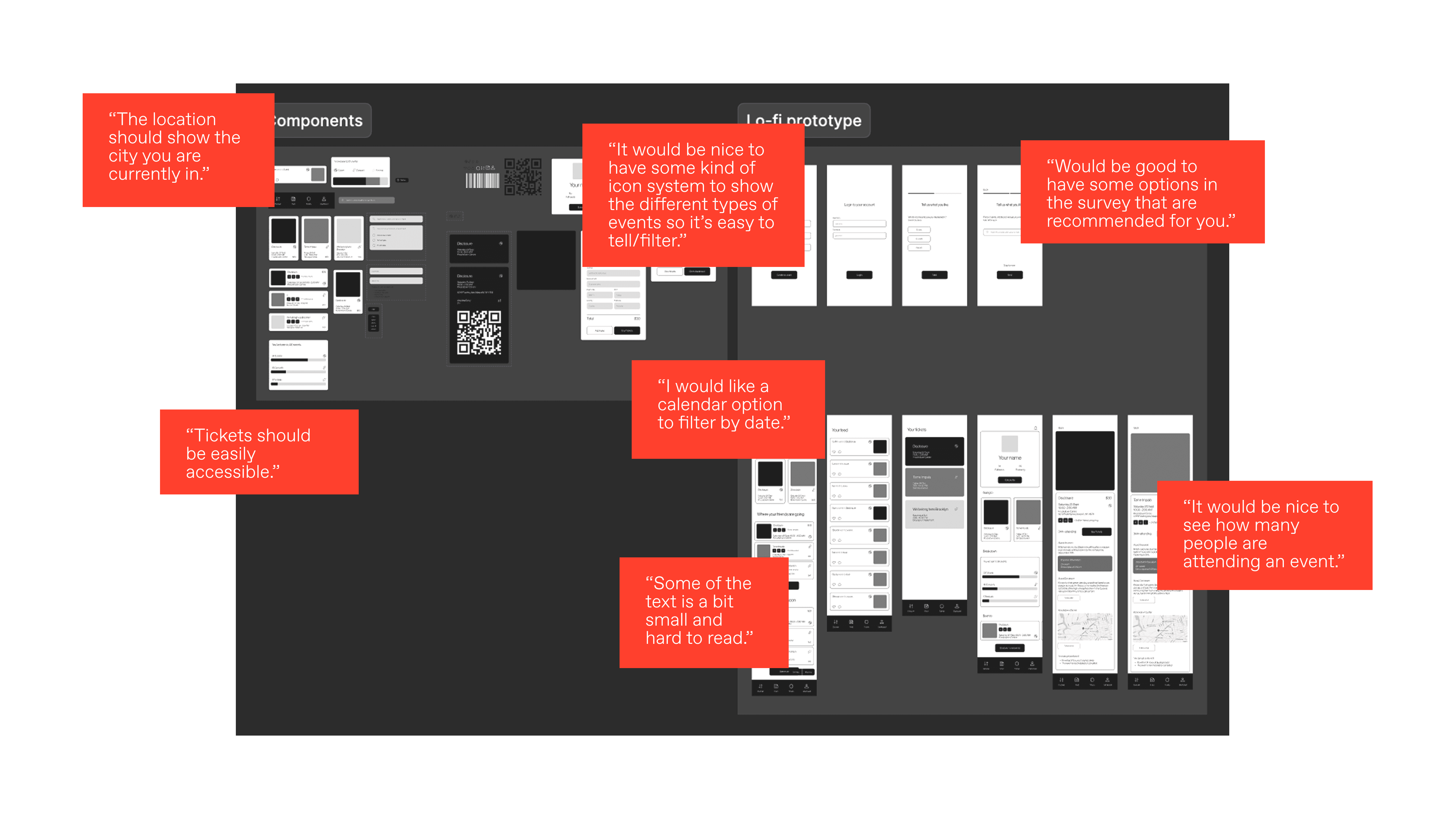
Based on research insights, I began sketching initial concepts. I then tested my lo-fi prototype with users with feedback focusing on filtering systems, easy access to tickets and recommendations in the survey. I iterated on the designs based on this feedback.
Brand Identity & Visual Design
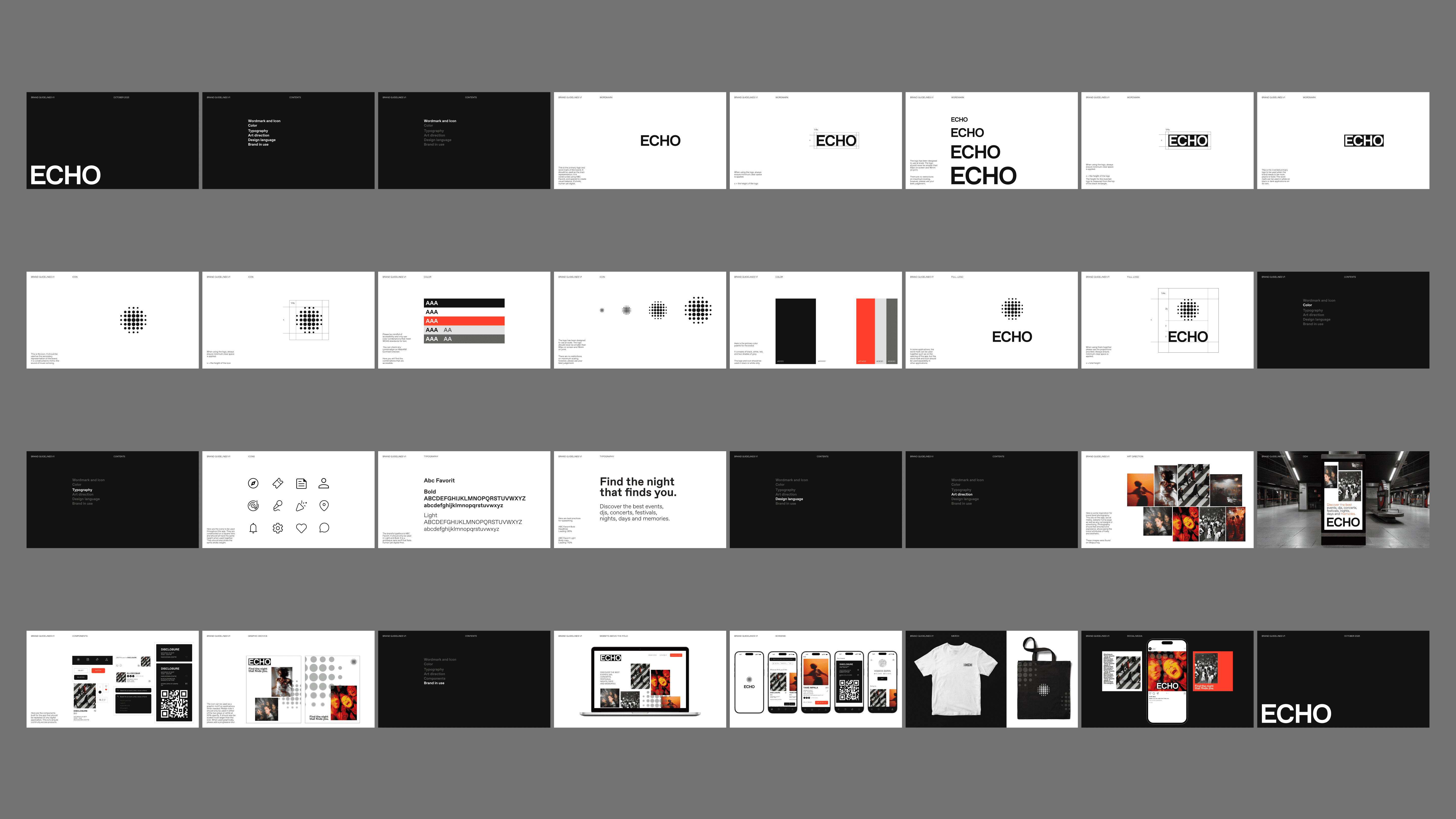
After exploring 3 routes, I developed a brand identity for Echo, with a minimal yet bold color palette, expressive photography, taken from Midjourney, and editorial look and feel to stand out from competitors in the space. I created a marketing site to explore how the brand would express itself on a more broader scale while also developed components that I used in my hi-fidelity prototype.
High-Fidelity Prototypes
The final high-fidelity prototypes brought together all learnings into a polished, interactive experience showcasing:
Personalized Discovery Feed: events ranked by relevance to user tastes and friend activity
Feed: see what concerts friends are interested in or attending
Smart Recommendations: Bespoke suggestions based on a survey, listening history, past attendance, and social connections
Following: track favorite artists, venues and friends
The Solution
My main challenge throughout this project was to meaningfully differentiate from established competitors in the crowded events space. I addressed this through two key innovations:
Bespoke Recommendations: Rather than generic guides, I created a user survey to help with recommendations. The home page is categorized to feature events based on preferences, past attendance and friends activity.
Social-First Design: I elevated the social aspect from a secondary feature to a core organizing principle, prominently showcasing which events friends are attending
Learnings
My main challenge takeaway was learning switch between perspectives, sometimes stepping back to view the product holistically, and other times zooming in to refine the smallest details. I would like to continue to explore building out more bespoke survey for recommendations and further interactions.